

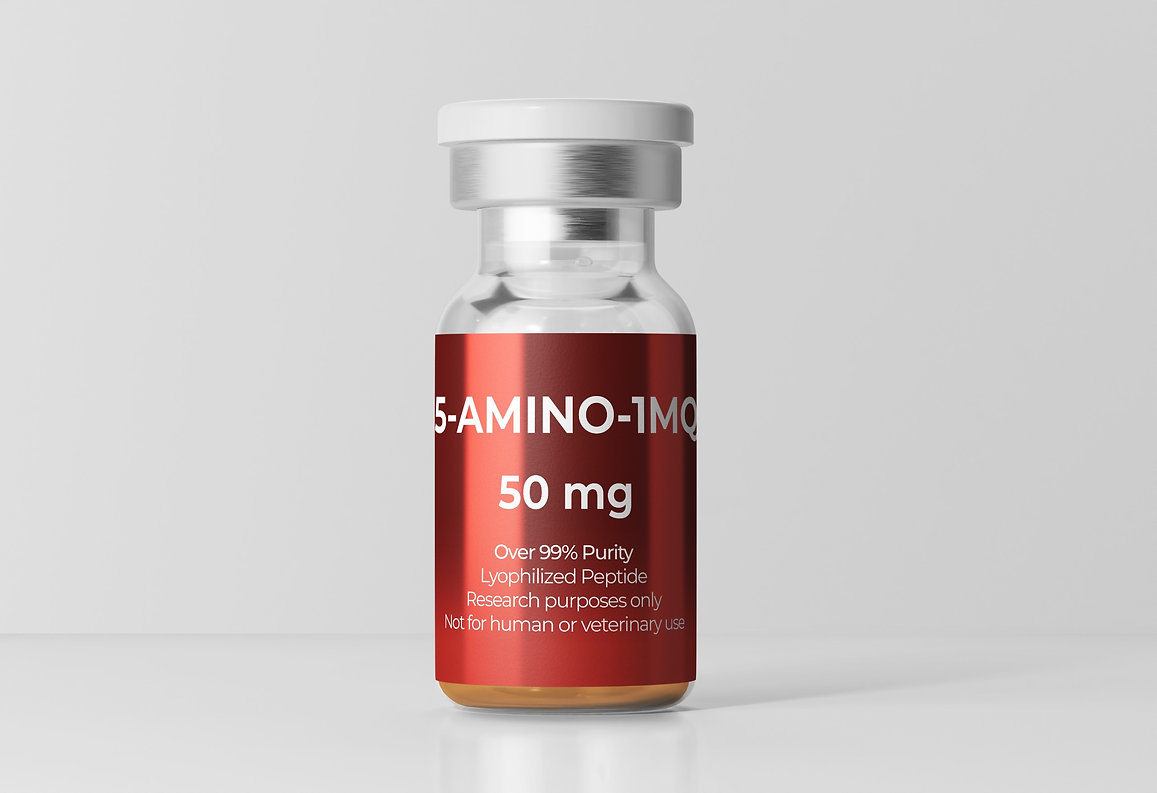
5-Amino-1MQ — NNMT Inhibitor for Metabolic & Longevity Research
5-Amino-1MQ (5-Amino-1-Methylquinolinium) is a highly selective, cell-permeable small-molecule inhibitor of Nicotinamide N-Methyltransferase (NNMT) a cytosolic enzyme that has emerged as a compelling target in metabolic dysfunction, obesity, and cellular aging research. Originally developed through drug discovery programs at Cornell University’s Baker Institute, 5-Amino-1MQ represents a structurally distinct class of research compounds: a quinolinium salt engineered for precision inhibition of a single enzymatic pathway.
Mechanism of Action
NNMT catalyzes the methylation of nicotinamide using S-adenosylmethionine (SAM) as a methyl donor, producing 1-methylnicotinamide and depleting the methyl pool available for other critical biological processes. When NNMT is overexpressed as is commonly observed in obese and metabolically dysregulated adipose tissue this reaction diverts nicotinamide away from the NAD⁺ salvage pathway, leading to progressive cellular NAD⁺ depletion.
By selectively inhibiting NNMT, 5-Amino-1MQ allows nicotinamide to be redirected back into NAD⁺ biosynthesis via the salvage pathway. Elevated intracellular NAD⁺ subsequently activates SIRT1, a longevity-associated sirtuin deacetylase that plays a central role in metabolic regulation, insulin signaling, mitochondrial biogenesis (through PGC-1α activation), and inflammatory gene suppression.
Preclinical Research Findings
In preclinical rodent models, 5-Amino-1MQ-treated subjects demonstrated significantly reduced body weights, white adipose tissue mass, and adipocyte sizes — notably without any measurable impact on food intake or observable adverse effects. This metabolic profile — fat reduction independent of appetite suppression distinguishes 5-Amino-1MQ from conventional anti-obesity compounds and positions it as a thermogenic or metabolic reprogramming agent.
Research suggests that the restoration of NAD⁺ increases the basal metabolic rate of white adipose tissue cells without the use of central nervous system stimulants. Researchers hypothesize this occurs through “futile cycling,” where cells expend energy to maintain electrochemical gradients rather than storing it as lipid droplets, a mechanism being compared to mitochondrial uncoupling in ongoing bioenergetic studies.
Beyond adipose tissue, NNMT inhibition has shown potential in muscle tissue, with studies indicating it may rejuvenate aged muscle satellite cells, promoting better regeneration and contractile force in older research models.
NNMT inhibition in adipose tissue has also been associated with improved glucose uptake and insulin sensitivity in preclinical models, consistent with the restoration of NAD⁺-dependent sirtuin activity particularly SIRT1 which plays a well-documented role in insulin signaling and glucose homeostasis.
Research Applications
5-Amino-1MQ is actively investigated across the following research domains: metabolic dysfunction and diet-induced obesity models, NAD⁺ biology and sirtuin pathway activation, cellular aging and longevity mechanisms, adipose tissue remodeling, insulin resistance and glucose homeostasis, and mitochondrial bioenergetics.
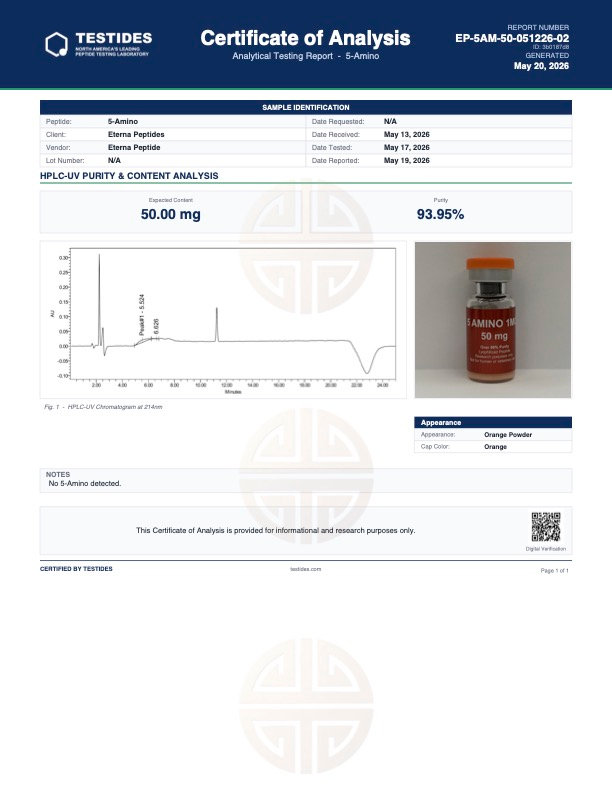
Supplied by Eterna Peptides for In Vitro Laboratory Research Only. Not intended for human consumption. Certificate of Analysis available upon request.
Reviews
There are no reviews yet.